Clinical Trials with a Heart: How Dr. Celia Maxwell Is Shaping the Future of Research
For more than four decades, Dr. Celia Maxwell has built a career defined by service, curiosity,…
For more than four decades, Dr. Celia Maxwell has built a career defined by service, curiosity, and an unwavering commitment to improving the health of underserved communities.
Today, as Director of Clinical Trials at Howard University College of Medicine, she is helping shape the future of clinical research while ensuring that the communities most affected by health disparities have a seat at the table.
Yet Dr. Maxwell never intended to become a physician.
An Unexpected Path to Medicine
Dr. Maxwell began her career as a nurse at Presbyterian Hospital in New York City, where interactions with a small number of minoritized medical students encouraged her to consider medicine as a profession.
“I always thought that medicine happened by accident because it wasn’t a plan,” she recalled.
After medical school at Columbia University, Dr. Maxwell visited Howard University at the invitation of a fellow medical student. What she found there changed the course of her career.
For the first time, Dr. Maxwell worked in a medical community where many of the physicians there reflected the populations they served and were deeply connected to a larger mission of ensuring all communities have opportunities to benefit from medical advances. The experience was transformative.
“I liked the feeling of being in a community,” she said. “I had never seen anything like that before.”
Dr. Maxwell chose Howard for her internship and soon discovered mentors who would help expand her vision of what was possible.
One of those mentors encouraged her to apply to the National Institutes of Health (NIH) despite her lack of formal research experience. Though initially hesitant, she earned a competitive fellowship that launched her research career.
Expanding Her Vision
At NIH, she trained in parasitology, conducted research, traveled internationally, and developed a broader understanding of medicine and science.
She later held leadership roles at the U.S. Food and Drug Administration and completed a health policy fellowship in the United States Senate, experiences that deepened her understanding of the systems that shape health outcomes.
Throughout her career, she remained connected to Howard’s mission and eventually returned, advancing through faculty and leadership positions before eventually becoming Director of Clinical Trials.
“Howard for me is pivotal,” Dr. Maxwell reflected. “I consider it a privilege to be here and to have the opportunity to give back.”
Finding Purpose in Clinical Trials
Dr. Maxwell’s path into clinical trials was almost accidental as well.
As an infectious disease specialist, she witnessed the devastating impact of COVID-19 firsthand. She treated patients, helped establish telehealth services, and served as a trusted voice for media outlets seeking accurate information during a time of uncertainty.
What began as an unexpected assignment quickly revealed both the promise and the challenges of clinical research.
Supported by her leadership, Howard successfully enrolled 150 participants in a COVID-19 vaccine trial, demonstrating the institution’s ability to recruit and engage community members in research. However, when the trial ended and the sponsor-provided infrastructure disappeared, the university found itself essentially starting over.
“They removed everything. By year two, the infrastructure that we had been accustomed to was gone,” Dr. Maxwell recalled.
The experience revealed an important challenge: participation in clinical research requires long-term infrastructure, not temporary solutions.
Building a Foundation Through Beacon of Hope
That challenge became an opportunity through support from Beacon of Hope and its partners.
Investments helped Howard establish critical infrastructure, including dedicated clinical trial facilities, staffing support, workforce development programs, and a research pharmacy. Together, these resources allowed the university to build a sustainable clinical trials program rather than relying on short-term projects.
Dr. Maxwell credits these efforts with moving Howard from having only a fraction of the resources it needed to becoming a highly competitive clinical trials program.
“That infrastructure made all the difference in the world,” Dr. Maxwell said. “It gave us a landing space to be more competitive.”
One of the most significant advances supported through Beacon of Hope was the establishment of a dedicated research pharmacy. Prior to this investment, Howard’s ability to compete for certain clinical trials was limited by the lack of specialized pharmacy infrastructure needed to manage investigational medications.
“The research pharmacy was transformational,” Dr. Maxwell said. “Without a research pharmacy, there are many studies you simply can’t do.”
The addition of this critical resource not only enhanced operational capacity but also created new opportunities for researchers to pursue innovative clinical trials that benefit the communities Howard serves.
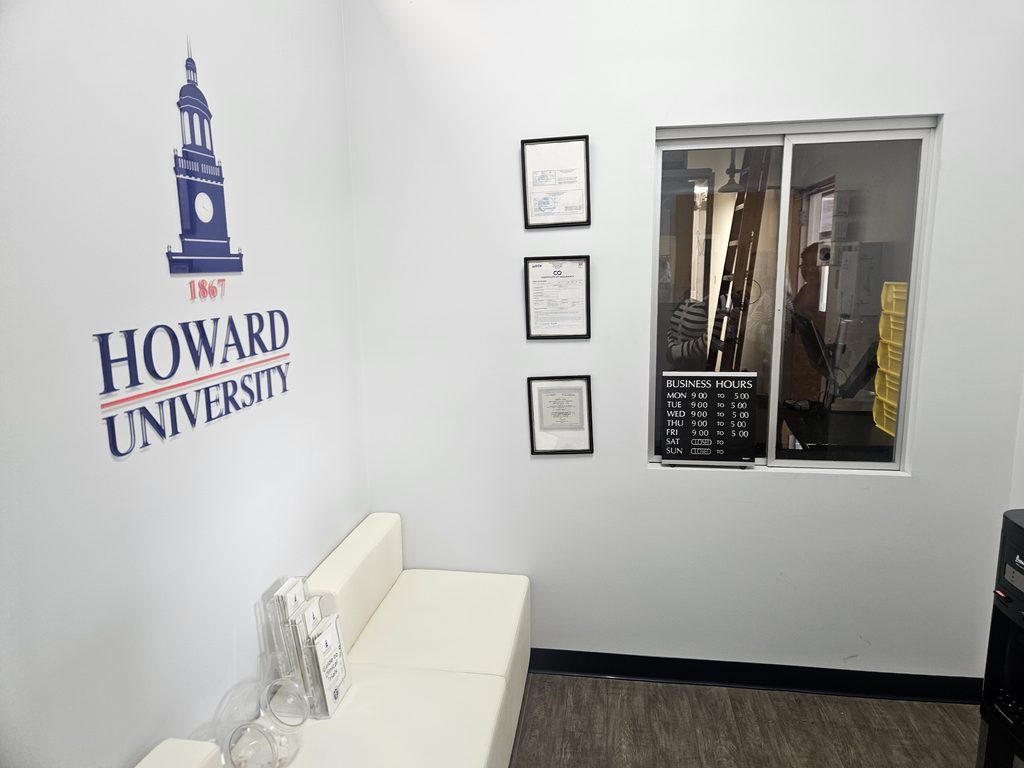
Howard University’s Research Pharmacy strengthens the institution’s ability to conduct and support clinical trials across multiple therapeutic areas.
Clinical Trials with a Heart
For Dr. Maxwell, however, success is measured by more than facilities or enrollment numbers.
She describes Howard’s approach as “clinical trials with a heart.” The phrase reflects her belief that scientific rigor and compassion must coexist.
“What I mean when I say clinical trials with a heart is we have to follow the same scientific rigors. That cannot change,” she explained. “But I have a commitment to the community that is trusting us.”
She recalls participants who came to clinical trial screenings only to discover serious underlying health conditions. Rather than simply disqualifying them and sending them home, her team ensures they receive immediate medical attention and support.
For communities that have historically been excluded from or harmed by research, trust must be earned every day. Dr. Maxwell understands this deeply. Her career has been dedicated not only to advancing science, but also to ensuring that the people most affected by health disparities have an opportunity to help shape that science.
As Howard continues to expand its clinical research program, Maxwell remains committed to advancing equity and serving communities through research.
Supported by strategic partnerships and investments in infrastructure, Howard is building a stronger foundation for inclusive clinical trials. For Dr. Maxwell, the goal is simple: rigorous science, guided by humanity. That’s what “clinical trials with a heart” truly means.